
स्वतंत्रता और एकीकरण
India · 1947स्वतंत्रता और विभाजन: भारतीय संघ का जन्म, 15 अगस्त 1947
15 अगस्त 1947 को भारत एक स्वतंत्र डोमिनियन बन गया, जब भारतीय स्वतंत्रता अधिनियम ने ब्रिटिश भारत को भारत और पाकिस्तान में विभाजित कर दिया। स्वतंत्रता के साथ बड़े पैमाने पर पलायन और सांप्रदायिक हिंसा, सरदार पटेल के नेतृत्व में रियासतों का एकीकरण, संविधान सभा द्वारा संविधान निर्माण और कश्मीर पर युद्ध भी सामने आए।
Polity & Governanceराजव्यवस्था और शासन
- Indian Independence Act 1947, which received Royal Assent on 18 July and gave effect to the 3 June Mountbatten Plan, ended British rule and provided for the creation of the dominions of India and Pakistan — the legal instrument of the transfer of power.
- Jawaharlal Nehru became the first Prime Minister and Lord Mountbatten the first Governor-General of independent India on 15 August 1947, marked by Nehru's 'Tryst with Destiny' address — the formal birth of the Indian state.
- The Constituent Assembly, sitting since December 1946, became a sovereign constitution-making body after independence, and its Drafting Committee under B.R. Ambedkar was constituted on 29 August 1947 — a key stage in framing the Constitution of free India.
- The States Department under Sardar Patel and V.P. Menon secured the accession of most of the roughly 565 princely states through the Instrument of Accession by 15 August 1947 — laying the territorial foundation of the Union.
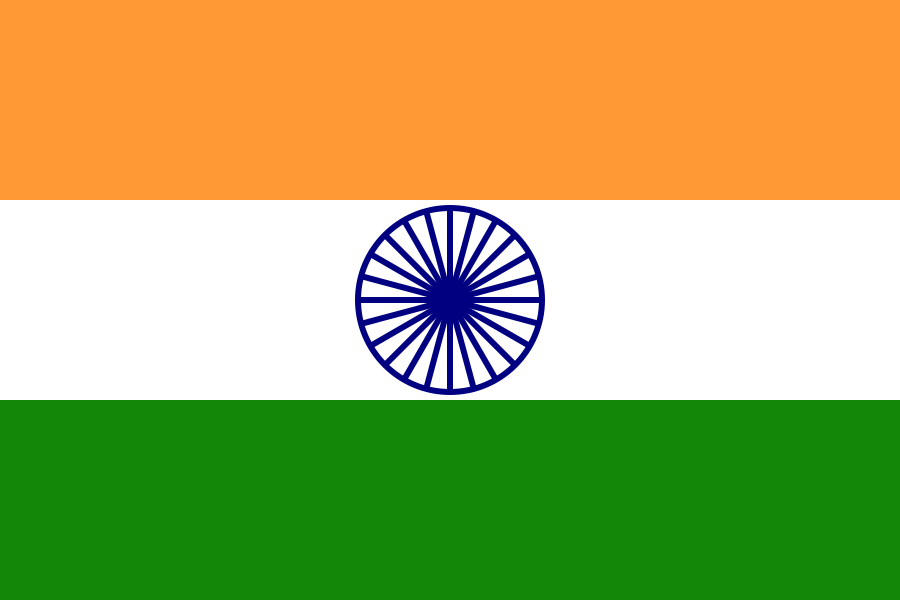
- The Constituent Assembly adopted the tricolour with the Ashoka Chakra as the national flag on 22 July 1947 — establishing a central symbol of the new nation.
- भारतीय स्वतंत्रता अधिनियम 1947, जिसे 18 जुलाई को शाही स्वीकृति मिली और जिसने 3 जून की माउंटबेटन योजना को प्रभावी किया, ने ब्रिटिश शासन को समाप्त कर दिया और भारत तथा पाकिस्तान नामक डोमिनियन के निर्माण का प्रावधान किया — यह सत्ता हस्तांतरण का कानूनी दस्तावेज था।
- 15 अगस्त 1947 को जवाहरलाल नेहरू स्वतंत्र भारत के पहले प्रधान मंत्री और लॉर्ड माउंटबेटन पहले गवर्नर-जनरल बने, जिसे नेहरू के 'ट्रिस्ट विद डेस्टिनी' (नियति से साक्षात्कार) भाषण से चिह्नित किया गया — यह भारतीय राज्य का औपचारिक जन्म था।
- दिसंबर 1946 से कार्यरत संविधान सभा, स्वतंत्रता के बाद एक संप्रभु संविधान निर्मात्री संस्था बन गई, और 29 अगस्त 1947 को बी.आर. अंबेडकर की अध्यक्षता में इसकी प्रारूप समिति का गठन किया गया — यह स्वतंत्र भारत के संविधान निर्माण में एक महत्वपूर्ण चरण था।
- सरदार पटेल और वी.पी. मेनन के नेतृत्व वाले रियासती विभाग ने 15 अगस्त 1947 तक 'इंस्ट्रूमेंट ऑफ एक्सेशन' (विलय पत्र) के माध्यम से लगभग 565 में से अधिकांश रियासतों का विलय सुनिश्चित किया — जिसने संघ की क्षेत्रीय नींव रखी।
- संविधान सभा ने 22 जुलाई 1947 को अशोक चक्र वाले तिरंगे को राष्ट्रीय ध्वज के रूप में अपनाया — जिसने नए राष्ट्र का एक केंद्रीय प्रतीक स्थापित किया।
Economyअर्थव्यवस्था
- Partition severed an integrated economy: East Bengal's raw jute was cut off from Calcutta's mills, while important cotton-growing and canal-irrigated areas of West Punjab went to Pakistan — dislocating industry and agriculture.
- R.K. Shanmukham Chetty presented the first budget of independent India on 26 November 1947 — setting out the finances of the new Dominion.
- The Reserve Bank of India temporarily served as the central bank for both dominions until 30 June 1948 — managing a fragile monetary transition.
- The assets and liabilities of undivided India, including cash balances, railways and military stores, were divided between the two dominions — seeding later financial disputes.
- विभाजन ने एक एकीकृत अर्थव्यवस्था को खंडित कर दिया: पूर्वी बंगाल का कच्चा जूट कलकत्ता की मिलों से कट गया, जबकि पश्चिमी पंजाब के महत्वपूर्ण कपास उत्पादक और नहरी सिंचाई वाले क्षेत्र पाकिस्तान में चले गए — जिससे उद्योग और कृषि अस्त-व्यस्त हो गए।
- आर.के. शणमुखम चेट्टी ने 26 नवंबर 1947 को स्वतंत्र भारत का पहला बजट पेश किया — जिसमें नए डोमिनियन के वित्त की रूपरेखा प्रस्तुत की गई थी।
- भारतीय रिज़र्व बैंक ने 30 जून 1948 तक अस्थायी रूप से दोनों डोमिनियन के लिए केंद्रीय बैंक के रूप में कार्य किया — जिसने एक नाजुक मौद्रिक संक्रमण का प्रबंधन किया।
- नकद शेष, रेलवे और सैन्य भंडार सहित अविभाजित भारत की संपत्तियों और देनदारियों को दोनों डोमिनियन के बीच विभाजित किया गया — जिसने बाद के वित्तीय विवादों के बीज बोए।
Society & Cultureसमाज और संस्कृति
- Partition set off one of history's largest migrations, with an estimated 10–15 million people crossing the new borders amid communal violence in Punjab and Bengal — a humanitarian catastrophe with large-scale loss of life.
- Mahatma Gandhi remained in Calcutta rather than join the Delhi celebrations and fasted in September 1947 for communal peace — a moral counterpoint to the Partition bloodshed, credited with calming the city.
- A vast refugee influx, especially from West Punjab, forced large-scale relief and rehabilitation by the new state — reshaping cities like Delhi and the demography of northern India.
- विभाजन ने इतिहास के सबसे बड़े विस्थापनों में से एक को जन्म दिया, जिसमें पंजाब और बंगाल में सांप्रदायिक हिंसा के बीच अनुमानित 1 से 1.5 करोड़ लोगों ने नई सीमाओं को पार किया — यह बड़े पैमाने पर जनहानि के साथ एक मानवीय त्रासदी थी।
- महात्मा गांधी दिल्ली के समारोहों में शामिल होने के बजाय कलकत्ता में रहे और सांप्रदायिक शांति के लिए सितंबर 1947 में उपवास किया — यह विभाजन के रक्तपात के खिलाफ एक नैतिक प्रतिकार था, जिसका श्रेय शहर को शांत करने को दिया जाता है।
- विशेष रूप से पश्चिमी पंजाब से शरणार्थियों की भारी आमद ने नए राज्य को बड़े पैमाने पर राहत और पुनर्वास कार्य करने के लिए मजबूर किया — जिसने दिल्ली जैसे शहरों और उत्तरी भारत की जनसांख्यिकी को नया आकार दिया।
India & the Worldभारत और विश्व
- The Radcliffe Award, announced on 17 August 1947, fixed the India–Pakistan boundary across Punjab and Bengal — its hurried demarcation intensified border violence and left lasting disputes.
- Maharaja Hari Singh signed the Instrument of Accession of Jammu and Kashmir in October 1947 after an invasion by tribal forces from Pakistan — triggering the first India–Pakistan war and the enduring Kashmir dispute.
- Indian troops were airlifted to Srinagar on 27 October 1947 — beginning India's military defence of the Kashmir Valley.
- The Asian Relations Conference, held in New Delhi in March–April 1947, gathered delegates from across Asia — an early assertion of Asian solidarity and a preview of independent India's foreign policy outlook.
- India began independence as a Dominion within the British Commonwealth, retaining a Governor-General pending its own Constitution — defining its initial constitutional status.
- 17 अगस्त 1947 को घोषित रैडक्लिफ अवार्ड ने पंजाब और बंगाल में भारत-पाकिस्तान सीमा तय की — इसके जल्दबाजी में किए गए सीमांकन ने सीमावर्ती हिंसा को बढ़ा दिया और स्थायी विवाद छोड़ दिए।
- पाकिस्तान के कबायली बलों के आक्रमण के बाद अक्टूबर 1947 में महाराजा हरि सिंह ने जम्मू और कश्मीर के 'इंस्ट्रूमेंट ऑफ एक्सेशन' (विलय पत्र) पर हस्ताक्षर किए — जिससे पहला भारत-पाकिस्तान युद्ध और स्थायी कश्मीर विवाद शुरू हुआ।
- 27 अक्टूबर 1947 को भारतीय सैनिकों को हवाई मार्ग से श्रीनगर ले जाया गया — जिससे कश्मीर घाटी की भारत की सैन्य रक्षा की शुरुआत हुई।
- मार्च-अप्रैल 1947 में नई दिल्ली में आयोजित एशियाई संबंध सम्मेलन में पूरे एशिया के प्रतिनिधि एकत्र हुए — यह एशियाई एकजुटता का प्रारंभिक दावा और स्वतंत्र भारत के विदेश नीति के दृष्टिकोण की एक झलक थी।
- भारत ने ब्रिटिश राष्ट्रमंडल के भीतर एक डोमिनियन के रूप में स्वतंत्रता की शुरुआत की, जिसने अपने स्वयं के संविधान के निर्माण तक एक गवर्नर-जनरल को बनाए रखा — जो इसकी प्रारंभिक संवैधानिक स्थिति को परिभाषित करता है।
प्रमुख व्यक्तित्व
Jawaharlal Nehru — first Prime Minister of independent India from 15 August 1947; delivered the 'Tryst with Destiny' addSardar Vallabhbhai Patel — Deputy Prime Minister and Home Minister; architect of the integration of the princely states.B.R. Ambedkar — Law Minister and Chairman of the Drafting Committee from 29 August 1947.Lord Louis Mountbatten — last Viceroy and first Governor-General of the Dominion of India; oversaw the transfer of powerMahatma Gandhi — campaigned against communal violence in Bengal and Calcutta during Partition.R.K. Shanmukham Chetty — first Finance Minister of independent India; presented the first budget.
UPSC / राज्य PCS — परीक्षा फोकस
- Modern History: the Indian Independence Act 1947 and the 3 June Mountbatten Plan — the mechanism of the transfer of power and Partition.
- Polity: integration of the princely states via the Instrument of Accession under Sardar Patel — the making of the Indian Union.
- Polity: the Constituent Assembly, the Drafting Committee under Ambedkar and Dominion status before 1950 — constitution-making after independence.
- IR / Modern History: accession of Jammu and Kashmir and the 1947–48 war — origins of the Kashmir question and India–Pakistan relations.
- Society / Modern History: Partition, communal violence and the refugee crisis — Partition historiography and its long-term social impact.
- Economy: Partition's impact on assets, trade and public finance, and the first budget of independent India — the baseline of the post-Independence economy.
- आधुनिक इतिहास: भारतीय स्वतंत्रता अधिनियम 1947 और 3 जून की माउंटबेटन योजना — सत्ता हस्तांतरण और विभाजन का तंत्र।
- राजव्यवस्था: सरदार पटेल के नेतृत्व में 'इंस्ट्रूमेंट ऑफ एक्सेशन' के माध्यम से रियासतों का एकीकरण — भारतीय संघ का निर्माण।
- राजव्यवस्था: संविधान सभा, अंबेडकर के नेतृत्व में प्रारूप समिति और 1950 से पहले डोमिनियन की स्थिति — स्वतंत्रता के बाद संविधान निर्माण।
- अंतर्राष्ट्रीय संबंध / आधुनिक इतिहास: जम्मू और कश्मीर का विलय और 1947-48 का युद्ध — कश्मीर प्रश्न की उत्पत्ति और भारत-पाकिस्तान संबंध।
- समाज / आधुनिक इतिहास: विभाजन, सांप्रदायिक हिंसा और शरणार्थी संकट — विभाजन का इतिहासलेखन और इसका दीर्घकालिक सामाजिक प्रभाव।
- अर्थव्यवस्था: संपत्तियों, व्यापार और सार्वजनिक वित्त पर विभाजन का प्रभाव, और स्वतंत्र भारत का पहला बजट — स्वतंत्रता के बाद की अर्थव्यवस्था की आधाररेखा।
Researched by a multi-model AI editorial board and cross-checked against sources; Bills are real records from BillTracker. This is a study aid, not a substitute for primary sources. Spotted an error? Tell us.