
उदारीकरण
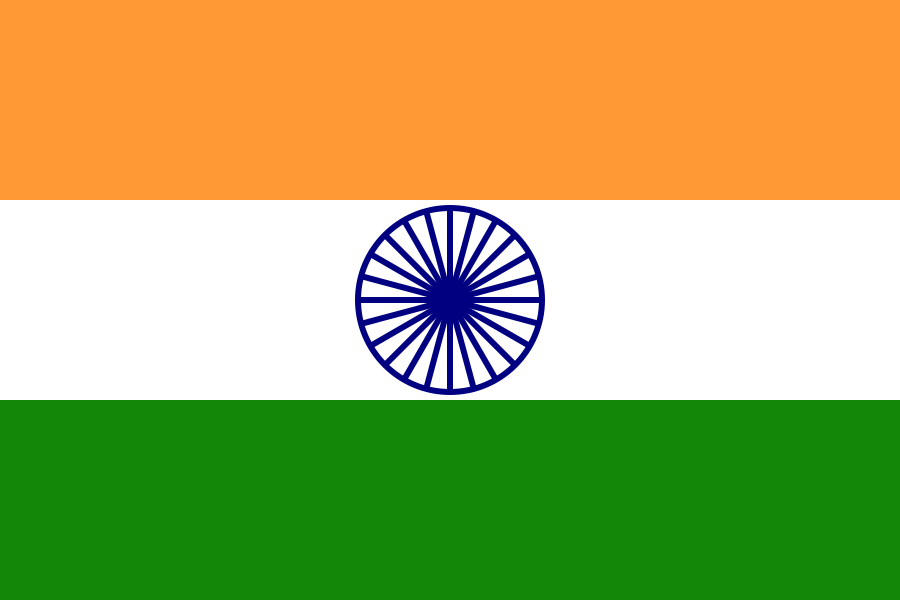
India · 1991भुगतान संतुलन के संकट ने भारत के 1991 के आर्थिक उदारीकरण की शुरुआत की
कुछ ही हफ्तों के आयात के लायक विदेशी मुद्रा भंडार के साथ भुगतान संतुलन के संकट का सामना करते हुए, भारत ने रुपये का अवमूल्यन किया, विदेशों में सोना गिरवी रखा और प्रधानमंत्री पी.वी. नरसिम्हा राव और वित्त मंत्री मनमोहन सिंह के नेतृत्व में आर्थिक सुधारों की शुरुआत की। इस वर्ष राजीव गांधी की हत्या और सोवियत संघ (USSR) का विघटन भी हुआ।
Polity & Governanceराजव्यवस्था एवं शासन
- Rajiv Gandhi, a former Prime Minister, was assassinated on 21 May 1991 at Sriperumbudur, Tamil Nadu, by an LTTE suicide bomber while campaigning — it disrupted the 10th Lok Sabha polls and reshaped national politics.
- The 10th Lok Sabha elections were held in phases in May–June 1991 — the Congress returned as the single largest party without a majority.
- P.V. Narasimha Rao was sworn in as Prime Minister on 21 June 1991, heading a minority Congress government and succeeding caretaker PM Chandra Shekhar — the administration that drove the reforms.
- The Places of Worship (Special Provisions) Act, 1991 froze the religious character of places of worship as on 15 August 1947, exempting the Ayodhya dispute — a key secularism statute.
- The Constitution (69th Amendment) Act, 1991 provided special status for Delhi as the National Capital Territory with a legislative assembly through Articles 239AA and 239AB — defining Delhi's governance structure.
- पूर्व प्रधानमंत्री राजीव गांधी की 21 मई 1991 को तमिलनाडु के श्रीपेरंबुदूर में चुनाव प्रचार के दौरान एक लिट्टे (LTTE) आत्मघाती हमलावर द्वारा हत्या कर दी गई — इसने 10वीं लोकसभा चुनाव को बाधित किया और राष्ट्रीय राजनीति को नया आकार दिया।
- 10वीं लोकसभा के चुनाव मई-जून 1991 में चरणों में आयोजित किए गए — कांग्रेस बिना बहुमत के सबसे बड़ी पार्टी के रूप में वापस लौटी।
- पी.वी. नरसिम्हा राव ने 21 जून 1991 को प्रधानमंत्री के रूप में शपथ ली, जो अल्पमत वाली कांग्रेस सरकार का नेतृत्व कर रहे थे और कार्यवाहक पीएम चंद्र शेखर के उत्तराधिकारी बने — इसी प्रशासन ने सुधारों को आगे बढ़ाया।
- पूजा स्थल (विशेष प्रावधान) अधिनियम, 1991 [The Places of Worship (Special Provisions) Act, 1991] ने 15 अगस्त 1947 की स्थिति के अनुसार पूजा स्थलों के धार्मिक स्वरूप को स्थिर कर दिया, जिसमें अयोध्या विवाद को छूट दी गई थी — यह धर्मनिरपेक्षता का एक प्रमुख कानून है।
- संविधान (69वां संशोधन) अधिनियम, 1991 ने अनुच्छेद 239AA और 239AB के माध्यम से एक विधानसभा के साथ दिल्ली को राष्ट्रीय राजधानी क्षेत्र के रूप में विशेष दर्जा प्रदान किया — जिसने दिल्ली के प्रशासनिक ढांचे को परिभाषित किया।
Economyअर्थव्यवस्था
- Foreign-exchange reserves fell to about $1.2 billion, barely enough for a few weeks of imports, and India pledged gold abroad to raise emergency foreign exchange — averting default and triggering reform.
- The rupee was devalued in two steps on 1 and 3 July 1991 — a major shift in exchange-rate and trade policy.
- The New Industrial Policy of 24 July 1991 abolished industrial licensing for most industries, removed the MRTP asset limit and reduced public-sector reserved areas to eight — dismantling major parts of the Licence-Permit Raj.
- FM Manmohan Singh's Union Budget of 24 July 1991 announced wide-ranging stabilisation and structural reform measures alongside IMF-supported assistance — the foundational moment of post-1991 economic policy.
- The Narasimham Committee on the Financial System was appointed in 1991 and recommended financial-sector reforms such as lower statutory pre-emptions, prudential norms and greater competition — the blueprint for banking modernisation.
- विदेशी मुद्रा भंडार गिरकर लगभग 1.2 बिलियन डॉलर रह गया, जो बमुश्किल कुछ हफ्तों के आयात के लिए पर्याप्त था, और भारत ने आपातकालीन विदेशी मुद्रा जुटाने के लिए विदेशों में सोना गिरवी रखा — जिससे डिफ़ॉल्ट को टाला गया और सुधारों की शुरुआत हुई।
- 1 और 3 जुलाई 1991 को दो चरणों में रुपये का अवमूल्यन किया गया — यह विनिमय दर और व्यापार नीति में एक बड़ा बदलाव था।
- 24 जुलाई 1991 की नई औद्योगिक नीति ने अधिकांश उद्योगों के लिए औद्योगिक लाइसेंसिंग को समाप्त कर दिया, एमआरटीपी (MRTP) संपत्ति सीमा को हटा दिया और सार्वजनिक क्षेत्र के लिए आरक्षित क्षेत्रों को घटाकर आठ कर दिया — जिसने 'लाइसेंस-परमिट राज' के प्रमुख हिस्सों को खत्म कर दिया।
- वित्त मंत्री मनमोहन सिंह के 24 जुलाई 1991 के केंद्रीय बजट में आईएमएफ (IMF) समर्थित सहायता के साथ-साथ व्यापक स्थिरीकरण और संरचनात्मक सुधार उपायों की घोषणा की गई — यह 1991 के बाद की आर्थिक नीति का आधारभूत क्षण था।
- वित्तीय प्रणाली पर नरसिम्हम समिति को 1991 में नियुक्त किया गया था और इसने वैधानिक पूर्व-क्रय (statutory pre-emptions) को कम करने, विवेकपूर्ण मानदंडों और अधिक प्रतिस्पर्धा जैसे वित्तीय क्षेत्र के सुधारों की सिफारिश की — जो बैंकिंग आधुनिकीकरण की रूपरेखा थी।
India & the Worldभारत और विश्व
- The Soviet Union was formally dissolved on 26 December 1991 — ending India's principal Cold War strategic and trade partner and forcing a foreign-policy and economic reorientation.
- The Gulf War of January–February 1991 raised oil-import costs and disrupted economic links with West Asia — an external shock that deepened the balance-of-payments crisis.
- The Narasimha Rao government began shaping the Look East Policy toward Southeast Asia — a response to the post-Cold War order and changing economic priorities.
- 26 दिसंबर 1991 को सोवियत संघ औपचारिक रूप से भंग हो गया — जिससे शीत युद्ध के दौरान भारत के प्रमुख रणनीतिक और व्यापारिक साझेदार का अंत हो गया और विदेश-नीति तथा आर्थिक पुनर्विन्यास के लिए मजबूर होना पड़ा।
- जनवरी-फरवरी 1991 के खाड़ी युद्ध ने तेल आयात की लागत बढ़ा दी और पश्चिम एशिया के साथ आर्थिक संबंधों को बाधित कर दिया — यह एक बाहरी झटका था जिसने भुगतान संतुलन संकट को और गहरा कर दिया।
- नरसिम्हा राव सरकार ने दक्षिण-पूर्व एशिया की ओर 'लुक ईस्ट नीति' (Look East Policy) को आकार देना शुरू किया — जो शीत युद्ध के बाद की व्यवस्था और बदलती आर्थिक प्राथमिकताओं की प्रतिक्रिया थी।
Science, Technology & Spaceविज्ञान, प्रौद्योगिकी एवं अंतरिक्ष
- IRS-1B, an Indian Remote Sensing satellite, was launched on 29 August 1991 from Baikonur aboard a Soviet launch vehicle — expanding operational remote sensing for agriculture, forestry and water resources.
- C-DAC developed the PARAM 8000, India's first indigenous supercomputer, after restrictions on access to advanced foreign supercomputers — a landmark in self-reliant high-performance computing.
- भारतीय रिमोट सेंसिंग उपग्रह, आईआरएस-1बी (IRS-1B), को 29 अगस्त 1991 को बैकोनूर से एक सोवियत प्रक्षेपण यान के माध्यम से लॉन्च किया गया — जिसने कृषि, वानिकी और जल संसाधनों के लिए परिचालन रिमोट सेंसिंग का विस्तार किया।
- विदेशी उन्नत सुपर कंप्यूटरों तक पहुंच पर प्रतिबंधों के बाद, सी-डैक (C-DAC) ने भारत का पहला स्वदेशी सुपर कंप्यूटर, परम 8000 (PARAM 8000) विकसित किया — जो आत्मनिर्भर उच्च-प्रदर्शन कंप्यूटिंग में एक मील का पत्थर था।
Society & Cultureसमाज एवं संस्कृति
- The 1991 Census recorded India's population at about 846 million and literacy at about 52.2% — a key demographic and planning benchmark.
- The Narasimha Rao government's September 1991 order modified the Mandal reservations by giving preference to poorer sections within OBCs and adding a 10% quota for economically backward sections among other castes, a move later contested in the courts.
- STAR TV began pan-Asian satellite broadcasts in 1991 and CNN's Gulf War coverage reached Indian viewers through cable networks — marking the rise of private satellite television and challenging Doordarshan's monopoly.
- The Bharat Ratna was conferred on Rajiv Gandhi posthumously, Sardar Vallabhbhai Patel posthumously and Morarji Desai — recognition spanning the freedom struggle and republican politics.
- 1991 की जनगणना ने भारत की जनसंख्या लगभग 846 मिलियन और साक्षरता दर लगभग 52.2% दर्ज की — जो एक प्रमुख जनसांख्यिकीय और योजनागत मानदंड है।
- नरसिम्हा राव सरकार के सितंबर 1991 के आदेश ने ओबीसी (OBC) के भीतर गरीब वर्गों को प्राथमिकता देकर और अन्य जातियों के बीच आर्थिक रूप से पिछड़े वर्गों के लिए 10% कोटा जोड़कर मंडल आरक्षण को संशोधित किया, एक ऐसा कदम जिसे बाद में अदालतों में चुनौती दी गई।
- स्टार टीवी (STAR TV) ने 1991 में पूरे एशिया में सैटेलाइट प्रसारण शुरू किया और केबल नेटवर्क के माध्यम से सीएनएन (CNN) का खाड़ी युद्ध कवरेज भारतीय दर्शकों तक पहुंचा — जिसने निजी सैटेलाइट टेलीविजन के उदय को चिह्नित किया और दूरदर्शन के एकाधिकार को चुनौती दी।
- राजीव गांधी को मरणोपरांत, सरदार वल्लभभाई पटेल को मरणोपरांत और मोरारजी देसाई को भारत रत्न से सम्मानित किया गया — यह स्वतंत्रता संग्राम और गणतंत्र की राजनीति को मान्यता देने वाला सम्मान था।
प्रमुख व्यक्तित्व
P.V. Narasimha Rao — Prime Minister from 21 June 1991; led the reform-era minority Congress government.Manmohan Singh — Union Finance Minister; presented the 24 July 1991 reform budget.Rajiv Gandhi — former Prime Minister, assassinated on 21 May 1991; awarded the Bharat Ratna posthumously.R. Venkataraman — President of India through 1991.S. Venkitaramanan — RBI Governor during the balance-of-payments crisis and gold pledge.Vijay P. Bhatkar — C-DAC scientist associated with the PARAM 8000 supercomputer.
UPSC / राज्य PCS — परीक्षा फोकस
- Economy: the 1991 economic reforms, New Industrial Policy and rupee devaluation are the standard starting point for questions on economic reforms since 1991.
- Economy: causes and triggers of the 1991 balance-of-payments crisis — Gulf War oil shock, fiscal and external imbalances, the gold pledge and IMF assistance.
- Modern History & Polity: Rajiv Gandhi's assassination, the 10th Lok Sabha and the formation of the Narasimha Rao minority government.
- Polity: the Places of Worship (Special Provisions) Act, 1991 and the Constitution (69th Amendment) Act creating the NCT framework for Delhi through Article 239AA.
- International Relations: the dissolution of the USSR in December 1991 and India's post-Cold War foreign-policy reorientation.
- Science & Technology: IRS-1B remote sensing and the PARAM 8000 supercomputer as markers of self-reliance.
- अर्थव्यवस्था: 1991 के आर्थिक सुधार, नई औद्योगिक नीति और रुपये का अवमूल्यन, 1991 से हुए आर्थिक सुधारों पर आधारित प्रश्नों के लिए मानक प्रारंभिक बिंदु हैं।
- अर्थव्यवस्था: 1991 के भुगतान संतुलन संकट के कारण और प्रेरक तत्त्व — खाड़ी युद्ध का तेल संकट, राजकोषीय और बाहरी असंतुलन, स्वर्ण गिरवी रखना और आईएमएफ (IMF) सहायता।
- आधुनिक इतिहास और राजव्यवस्था: राजीव गांधी की हत्या, 10वीं लोकसभा और नरसिम्हा राव की अल्पसंख्यक सरकार का गठन।
- राजव्यवस्था: पूजा स्थल (विशेष प्रावधान) अधिनियम, 1991 और संविधान (69वां संशोधन) अधिनियम, जिसने अनुच्छेद 239AA के माध्यम से दिल्ली के लिए एनसीटी (NCT) ढांचा तैयार किया।
- अंतरराष्ट्रीय संबंध: दिसंबर 1991 में सोवियत संघ का विघटन और भारत की शीत युद्ध के बाद की विदेश नीति का पुनर्विन्यास।
- विज्ञान एवं प्रौद्योगिकी: आईआरएस-1बी (IRS-1B) रिमोट सेंसिंग और परम 8000 (PARAM 8000) सुपर कंप्यूटर आत्मनिर्भरता के प्रतीक के रूप में।
Researched by a multi-model AI editorial board and cross-checked against sources; Bills are real records from BillTracker. This is a study aid, not a substitute for primary sources. Spotted an error? Tell us.