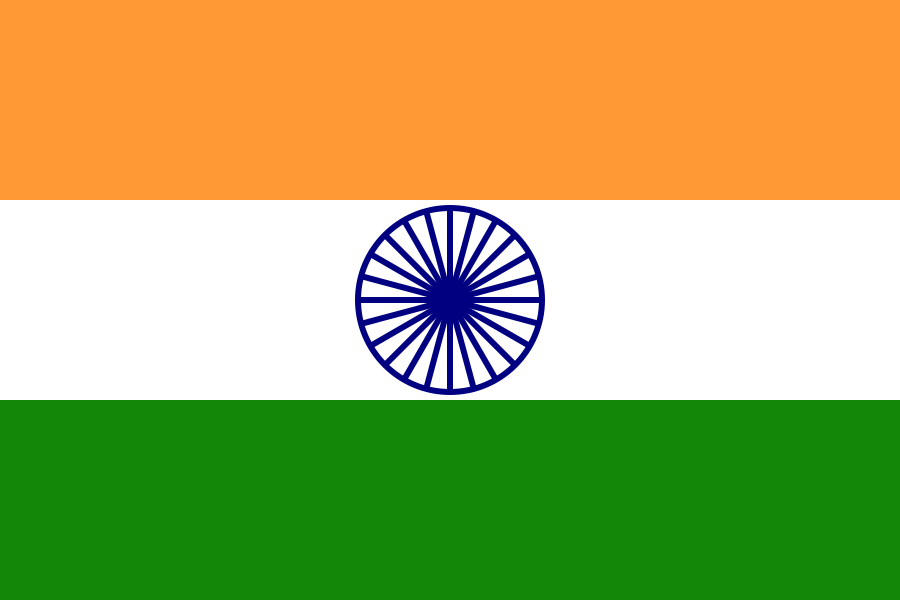

गणतंत्र और नेहरू युग
India · 1950संविधान लागू होने के साथ भारत एक गणतंत्र बना, 26 जनवरी 1950
26 जनवरी 1950 को संविधान लागू हुआ, जिससे भारत एक संप्रभु लोकतांत्रिक गणराज्य बना और डॉ. राजेंद्र प्रसाद इसके प्रथम राष्ट्रपति बने। सर्वोच्च न्यायालय, चुनाव आयोग और योजना आयोग की स्थापना हुई, जबकि वाक् स्वतंत्रता पर दिए गए प्रारंभिक निर्णयों ने 1951 के प्रथम संविधान संशोधन की रूपरेखा तैयार की।
Polity & Governanceराजव्यवस्था एवं शासन
- The Constitution of India came into force on 26 January 1950 — it replaced the Government of India Act, 1935 and made India a sovereign democratic republic, marking the first Republic Day.
- Dr. Rajendra Prasad was sworn in as the first President of India on 26 January 1950 — the office of Governor-General was abolished, ending C. Rajagopalachari's tenure.
- The Supreme Court of India was inaugurated on 28 January 1950 — it replaced the Federal Court, with Harilal J. Kania as the first Chief Justice of India.
- The Election Commission of India was established on 25 January 1950 under Article 324 — an independent body to conduct elections; Sukumar Sen became the first Chief Election Commissioner.
- The Representation of the People Act, 1950 was enacted — it provided the framework for electoral rolls, the allocation of seats and related election arrangements.
- भारत का संविधान 26 जनवरी 1950 को लागू हुआ — इसने भारत सरकार अधिनियम, 1935 का स्थान लिया और भारत को एक संप्रभु लोकतांत्रिक गणराज्य बनाया, जिसे प्रथम गणतंत्र दिवस के रूप में मनाया गया।
- 26 जनवरी 1950 को डॉ. राजेंद्र प्रसाद ने भारत के प्रथम राष्ट्रपति के रूप में शपथ ली — गवर्नर-जनरल का पद समाप्त कर दिया गया, जिससे सी. राजगोपालाचारी का कार्यकाल समाप्त हो गया।
- 28 जनवरी 1950 को भारत के सर्वोच्च न्यायालय का उद्घाटन हुआ — इसने संघीय न्यायालय का स्थान लिया और हरिलाल जे. कानिया भारत के पहले मुख्य न्यायाधीश बने।
- अनुच्छेद 324 के तहत 25 जनवरी 1950 को भारत निर्वाचन आयोग की स्थापना हुई — चुनाव कराने के लिए यह एक स्वतंत्र निकाय था; सुकुमार सेन प्रथम मुख्य चुनाव आयुक्त बने।
- जन प्रतिनिधित्व अधिनियम, 1950 अधिनियमित किया गया — इसने निर्वाचक नामावली, सीटों के आवंटन और चुनाव संबंधी अन्य व्यवस्थाओं के लिए रूपरेखा प्रदान की।
Economyअर्थव्यवस्था
- The Planning Commission was set up by a Government of India resolution on 15 March 1950, with Nehru as chairman — an extra-constitutional body created to formulate plans for national development.
- Finance Minister John Mathai presented the first Union Budget of the Republic in 1950 — the new Republic's first statement of fiscal priorities.
- States began enacting zamindari-abolition and land-reform laws, including the Bihar Land Reforms Act, 1950 — legal challenges to such laws contributed to the First Amendment and the creation of the Ninth Schedule in 1951.
- 15 मार्च 1950 को भारत सरकार के एक प्रस्ताव द्वारा योजना आयोग की स्थापना की गई, जिसके अध्यक्ष नेहरू थे — यह राष्ट्रीय विकास के लिए योजनाएँ बनाने हेतु गठित एक संविधानेतर निकाय था।
- वित्त मंत्री जॉन मथाई ने 1950 में गणतंत्र का पहला केंद्रीय बजट पेश किया — यह नए गणतंत्र की राजकोषीय प्राथमिकताओं का पहला आधिकारिक विवरण था।
- राज्यों ने जमींदारी-उन्मूलन और भूमि-सुधार कानून बनाना शुरू किया, जिनमें बिहार भूमि सुधार अधिनियम, 1950 शामिल था — ऐसे कानूनों को दी गई कानूनी चुनौतियों ने 1951 में प्रथम संशोधन और नौवीं अनुसूची के निर्माण में योगदान दिया।
Society & Cultureसमाज एवं संस्कृति
- The Constitution abolished untouchability under Article 17 and guaranteed Fundamental Rights — a legal foundation for social equality.
- Jana Gana Mana was adopted as the national anthem and Vande Mataram was accorded the status of national song by the Constituent Assembly on 24 January 1950 — official symbols of the Republic.
- The Lion Capital of Ashoka was adopted as the State Emblem of India on 26 January 1950 — linking the Republic to ancient Indian state tradition.
- Sardar Vallabhbhai Patel, Deputy Prime Minister and Home Minister, died on 15 December 1950 — he had overseen the integration of more than 500 princely states into the Union.
- संविधान ने अनुच्छेद 17 के तहत अस्पृश्यता को समाप्त कर दिया और मौलिक अधिकारों की गारंटी दी — यह सामाजिक समानता की एक कानूनी नींव थी।
- 24 जनवरी 1950 को संविधान सभा द्वारा 'जन गण मन' को राष्ट्रगान और 'वंदे मातरम' को राष्ट्रगीत का दर्जा दिया गया — ये गणतंत्र के आधिकारिक प्रतीक थे।
- 26 जनवरी 1950 को अशोक के सिंह-स्तंभ को भारत के राजचिह्न के रूप में अपनाया गया — यह गणतंत्र को प्राचीन भारतीय राज्य परंपरा से जोड़ता है।
- उप-प्रधानमंत्री एवं गृह मंत्री सरदार वल्लभभाई पटेल का 15 दिसंबर 1950 को निधन हो गया — उन्होंने 500 से अधिक रियासतों के भारतीय संघ में एकीकरण का नेतृत्व किया था।
Environment & Disastersपर्यावरण एवं आपदाएं
- The Assam–Tibet earthquake struck on 15 August 1950 — among the largest earthquakes recorded, it devastated parts of Assam and Tibet and caused heavy loss of life.
- The earthquake triggered massive landslides and floods in the Brahmaputra basin — worsening flood conditions across Assam.
- 15 अगस्त 1950 को असम-तिब्बत भूकंप आया — यह दर्ज किए गए सबसे बड़े भूकंपों में से एक था, जिसने असम और तिब्बत के कई हिस्सों को तबाह कर दिया और भारी जनहानि हुई।
- इस भूकंप ने ब्रह्मपुत्र बेसिन में बड़े पैमाने पर भूस्खलन और बाढ़ ला दी — जिससे पूरे असम में बाढ़ की स्थिति और गंभीर हो गई।
India & the Worldभारत एवं विश्व
- The Liaquat–Nehru Pact was signed on 8 April 1950 — Nehru and Pakistan Prime Minister Liaquat Ali Khan agreed to protect minorities and address the refugee crisis after communal violence in Bengal.
- India established diplomatic relations with the People's Republic of China on 1 April 1950 — having recognised the PRC in December 1949.
- The India–Nepal Treaty of Peace and Friendship was signed on 31 July 1950 — it framed modern Indo-Nepal relations and provided for close political and economic ties.
- The Korean War broke out on 25 June 1950 — India supported UN action against aggression while pressing for a negotiated settlement, reflecting its early foreign-policy approach.
- The Indo-Sikkim Treaty was signed on 5 December 1950 — making Sikkim an Indian protectorate, with India responsible for its defence, external affairs and communications.
- 8 अप्रैल 1950 को लियाकत-नेहरू समझौते पर हस्ताक्षर किए गए — बंगाल में सांप्रदायिक हिंसा के बाद अल्पसंख्यकों की रक्षा करने और शरणार्थी संकट के समाधान के लिए नेहरू और पाकिस्तान के प्रधानमंत्री लियाकत अली खान सहमत हुए।
- 1 अप्रैल 1950 को भारत ने पीपुल्स रिपब्लिक ऑफ चाइना (पीआरसी) के साथ राजनयिक संबंध स्थापित किए — भारत ने दिसंबर 1949 में ही पीआरसी को मान्यता दे दी थी।
- 31 जुलाई 1950 को भारत-नेपाल शांति और मैत्री संधि पर हस्ताक्षर किए गए — इसने आधुनिक भारत-नेपाल संबंधों की रूपरेखा तैयार की और घनिष्ठ राजनीतिक एवं आर्थिक संबंधों का मार्ग प्रशस्त किया।
- 25 जून 1950 को कोरियाई युद्ध छिड़ गया — भारत ने आक्रामकता के खिलाफ संयुक्त राष्ट्र की कार्रवाई का समर्थन किया, जबकि एक वार्ता-आधारित समाधान पर जोर दिया, जो इसकी प्रारंभिक विदेश नीति के दृष्टिकोण को दर्शाता है।
- 5 दिसंबर 1950 को भारत-सिक्किम संधि पर हस्ताक्षर किए गए — इससे सिक्किम एक भारतीय संरक्षित राज्य बन गया, और भारत को इसकी रक्षा, विदेशी मामलों तथा संचार की जिम्मेदारी सौंपी गई।
Landmark Judgments & Reportsऐतिहासिक निर्णय एवं रिपोर्ट
- A.K. Gopalan v. State of Madras (1950) — the Supreme Court upheld the Preventive Detention Act, 1950 and read Article 21's 'procedure established by law' narrowly, distinct from 'due process'.
- Romesh Thappar v. State of Madras (1950) — the Supreme Court struck down a ban on a journal's circulation, affirming freedom of speech under Article 19(1)(a).
- Brij Bhushan v. State of Delhi (1950) — the Supreme Court struck down pre-censorship of a publication; with Romesh Thappar it contributed to the First Amendment in 1951.
- ए.के. गोपालन बनाम मद्रास राज्य (1950) — सर्वोच्च न्यायालय ने निवारक निरोध अधिनियम, 1950 को बरकरार रखा और अनुच्छेद 21 की 'विधि द्वारा स्थापित प्रक्रिया' की संकीर्ण व्याख्या की, जो 'सम्यक प्रक्रिया' (due process) से भिन्न थी।
- रोमेश थापर बनाम मद्रास राज्य (1950) — सर्वोच्च न्यायालय ने एक पत्रिका के प्रसार पर लगे प्रतिबंध को रद्द कर दिया, और अनुच्छेद 19(1)(a) के तहत वाक् स्वतंत्रता की पुष्टि की।
- बृज भूषण बनाम दिल्ली राज्य (1950) — सर्वोच्च न्यायालय ने एक प्रकाशन की पूर्व-सेंसरशिप को रद्द कर दिया; रोमेश थापर मामले के साथ मिलकर इसने 1951 में प्रथम संशोधन का मार्ग प्रशस्त किया।
प्रमुख व्यक्तित्व
Dr. Rajendra Prasad — first President of India, sworn in on 26 January 1950.Jawaharlal Nehru — Prime Minister and first chairman of the Planning Commission.Dr. B.R. Ambedkar — Law Minister and chairman of the Drafting Committee of the Constitution that came into force.Sardar Vallabhbhai Patel — Deputy Prime Minister and Home Minister; integrator of the princely states; died on 15 DecembHarilal J. Kania — first Chief Justice of India.Sukumar Sen — first Chief Election Commissioner of India.
UPSC / राज्य PCS — परीक्षा फोकस
- Polity: commencement of the Constitution on 26 January 1950 and the transition from the Government of India Act, 1935 to a republic — a foundational Polity topic.
- Polity: creation of key constitutional institutions — President, Supreme Court and Election Commission under Article 324 — frequently tested in Prelims and Mains.
- Polity/Modern History: A.K. Gopalan, Romesh Thappar and Brij Bhushan — early constitutional jurisprudence on liberty, free speech and 'procedure established by law'.
- Economy: the Planning Commission as an extra-constitutional body, plus early zamindari abolition — anchors for planning and land-reform questions.
- IR: the Liaquat–Nehru Pact, India–Nepal Treaty, recognition of the PRC and the response to the Korean War — early neighbourhood policy and foreign-policy priorities.
- Geography/Disaster Management: the 1950 Assam–Tibet earthquake — a standard case study on Northeast seismicity.
- राजव्यवस्था: 26 जनवरी 1950 को संविधान का लागू होना और भारत सरकार अधिनियम, 1935 से गणतंत्र में संक्रमण — यह राजव्यवस्था का एक मूलभूत विषय है।
- राजव्यवस्था: प्रमुख संवैधानिक संस्थाओं का निर्माण — अनुच्छेद 324 के तहत राष्ट्रपति, सर्वोच्च न्यायालय और चुनाव आयोग — प्रारंभिक और मुख्य परीक्षाओं में अक्सर पूछे जाते हैं।
- राजव्यवस्था/आधुनिक इतिहास: ए.के. गोपालन, रोमेश थापर और बृज भूषण — स्वतंत्रता, वाक् स्वतंत्रता और 'विधि द्वारा स्थापित प्रक्रिया' पर प्रारंभिक संवैधानिक न्यायशास्त्र।
- अर्थव्यवस्था: योजना आयोग एक संविधानेतर निकाय के रूप में, तथा प्रारंभिक जमींदारी उन्मूलन — नियोजन और भूमि-सुधार संबंधी प्रश्नों के प्रमुख आधार।
- अंतर्राष्ट्रीय संबंध: लियाकत-नेहरू समझौता, भारत-नेपाल संधि, पीआरसी को मान्यता और कोरियाई युद्ध पर प्रतिक्रिया — प्रारंभिक पड़ोस नीति और विदेश-नीति की प्राथमिकताएँ।
- भूगोल/आपदा प्रबंधन: 1950 का असम-तिब्बत भूकंप — पूर्वोत्तर की भूकंपीयता पर एक मानक केस स्टडी।
Researched by a multi-model AI editorial board and cross-checked against sources; Bills are real records from BillTracker. This is a study aid, not a substitute for primary sources. Spotted an error? Tell us.