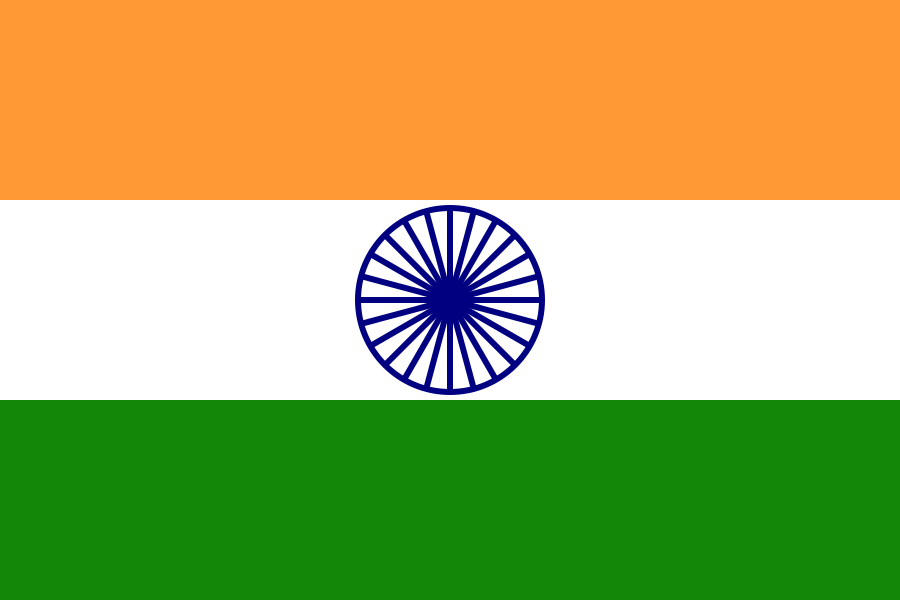

The Republic & the Nehru Years
India · 1950India becomes a Republic as the Constitution comes into force, 26 January 1950
On 26 January 1950 the Constitution came into force, making India a sovereign democratic republic with Dr. Rajendra Prasad as first President. The Supreme Court, Election Commission and Planning Commission were established, while early free-speech rulings foreshadowed the 1951 First Amendment.
Polity & Governanceराजव्यवस्था एवं शासन
- The Constitution of India came into force on 26 January 1950 — it replaced the Government of India Act, 1935 and made India a sovereign democratic republic, marking the first Republic Day.
- Dr. Rajendra Prasad was sworn in as the first President of India on 26 January 1950 — the office of Governor-General was abolished, ending C. Rajagopalachari's tenure.
- The Supreme Court of India was inaugurated on 28 January 1950 — it replaced the Federal Court, with Harilal J. Kania as the first Chief Justice of India.
- The Election Commission of India was established on 25 January 1950 under Article 324 — an independent body to conduct elections; Sukumar Sen became the first Chief Election Commissioner.
- The Representation of the People Act, 1950 was enacted — it provided the framework for electoral rolls, the allocation of seats and related election arrangements.
- भारत का संविधान 26 जनवरी 1950 को लागू हुआ — इसने भारत सरकार अधिनियम, 1935 का स्थान लिया और भारत को एक संप्रभु लोकतांत्रिक गणराज्य बनाया, जिसे प्रथम गणतंत्र दिवस के रूप में मनाया गया।
- 26 जनवरी 1950 को डॉ. राजेंद्र प्रसाद ने भारत के प्रथम राष्ट्रपति के रूप में शपथ ली — गवर्नर-जनरल का पद समाप्त कर दिया गया, जिससे सी. राजगोपालाचारी का कार्यकाल समाप्त हो गया।
- 28 जनवरी 1950 को भारत के सर्वोच्च न्यायालय का उद्घाटन हुआ — इसने संघीय न्यायालय का स्थान लिया और हरिलाल जे. कानिया भारत के पहले मुख्य न्यायाधीश बने।
- अनुच्छेद 324 के तहत 25 जनवरी 1950 को भारत निर्वाचन आयोग की स्थापना हुई — चुनाव कराने के लिए यह एक स्वतंत्र निकाय था; सुकुमार सेन प्रथम मुख्य चुनाव आयुक्त बने।
- जन प्रतिनिधित्व अधिनियम, 1950 अधिनियमित किया गया — इसने निर्वाचक नामावली, सीटों के आवंटन और चुनाव संबंधी अन्य व्यवस्थाओं के लिए रूपरेखा प्रदान की।
Economyअर्थव्यवस्था
- The Planning Commission was set up by a Government of India resolution on 15 March 1950, with Nehru as chairman — an extra-constitutional body created to formulate plans for national development.
- Finance Minister John Mathai presented the first Union Budget of the Republic in 1950 — the new Republic's first statement of fiscal priorities.
- States began enacting zamindari-abolition and land-reform laws, including the Bihar Land Reforms Act, 1950 — legal challenges to such laws contributed to the First Amendment and the creation of the Ninth Schedule in 1951.
- 15 मार्च 1950 को भारत सरकार के एक प्रस्ताव द्वारा योजना आयोग की स्थापना की गई, जिसके अध्यक्ष नेहरू थे — यह राष्ट्रीय विकास के लिए योजनाएँ बनाने हेतु गठित एक संविधानेतर निकाय था।
- वित्त मंत्री जॉन मथाई ने 1950 में गणतंत्र का पहला केंद्रीय बजट पेश किया — यह नए गणतंत्र की राजकोषीय प्राथमिकताओं का पहला आधिकारिक विवरण था।
- राज्यों ने जमींदारी-उन्मूलन और भूमि-सुधार कानून बनाना शुरू किया, जिनमें बिहार भूमि सुधार अधिनियम, 1950 शामिल था — ऐसे कानूनों को दी गई कानूनी चुनौतियों ने 1951 में प्रथम संशोधन और नौवीं अनुसूची के निर्माण में योगदान दिया।
Society & Cultureसमाज एवं संस्कृति
- The Constitution abolished untouchability under Article 17 and guaranteed Fundamental Rights — a legal foundation for social equality.
- Jana Gana Mana was adopted as the national anthem and Vande Mataram was accorded the status of national song by the Constituent Assembly on 24 January 1950 — official symbols of the Republic.
- The Lion Capital of Ashoka was adopted as the State Emblem of India on 26 January 1950 — linking the Republic to ancient Indian state tradition.
- Sardar Vallabhbhai Patel, Deputy Prime Minister and Home Minister, died on 15 December 1950 — he had overseen the integration of more than 500 princely states into the Union.
- संविधान ने अनुच्छेद 17 के तहत अस्पृश्यता को समाप्त कर दिया और मौलिक अधिकारों की गारंटी दी — यह सामाजिक समानता की एक कानूनी नींव थी।
- 24 जनवरी 1950 को संविधान सभा द्वारा 'जन गण मन' को राष्ट्रगान और 'वंदे मातरम' को राष्ट्रगीत का दर्जा दिया गया — ये गणतंत्र के आधिकारिक प्रतीक थे।
- 26 जनवरी 1950 को अशोक के सिंह-स्तंभ को भारत के राजचिह्न के रूप में अपनाया गया — यह गणतंत्र को प्राचीन भारतीय राज्य परंपरा से जोड़ता है।
- उप-प्रधानमंत्री एवं गृह मंत्री सरदार वल्लभभाई पटेल का 15 दिसंबर 1950 को निधन हो गया — उन्होंने 500 से अधिक रियासतों के भारतीय संघ में एकीकरण का नेतृत्व किया था।
Environment & Disastersपर्यावरण एवं आपदाएं
- The Assam–Tibet earthquake struck on 15 August 1950 — among the largest earthquakes recorded, it devastated parts of Assam and Tibet and caused heavy loss of life.
- The earthquake triggered massive landslides and floods in the Brahmaputra basin — worsening flood conditions across Assam.
- 15 अगस्त 1950 को असम-तिब्बत भूकंप आया — यह दर्ज किए गए सबसे बड़े भूकंपों में से एक था, जिसने असम और तिब्बत के कई हिस्सों को तबाह कर दिया और भारी जनहानि हुई।
- इस भूकंप ने ब्रह्मपुत्र बेसिन में बड़े पैमाने पर भूस्खलन और बाढ़ ला दी — जिससे पूरे असम में बाढ़ की स्थिति और गंभीर हो गई।
India & the Worldभारत एवं विश्व
- The Liaquat–Nehru Pact was signed on 8 April 1950 — Nehru and Pakistan Prime Minister Liaquat Ali Khan agreed to protect minorities and address the refugee crisis after communal violence in Bengal.
- India established diplomatic relations with the People's Republic of China on 1 April 1950 — having recognised the PRC in December 1949.
- The India–Nepal Treaty of Peace and Friendship was signed on 31 July 1950 — it framed modern Indo-Nepal relations and provided for close political and economic ties.
- The Korean War broke out on 25 June 1950 — India supported UN action against aggression while pressing for a negotiated settlement, reflecting its early foreign-policy approach.
- The Indo-Sikkim Treaty was signed on 5 December 1950 — making Sikkim an Indian protectorate, with India responsible for its defence, external affairs and communications.
- 8 अप्रैल 1950 को लियाकत-नेहरू समझौते पर हस्ताक्षर किए गए — बंगाल में सांप्रदायिक हिंसा के बाद अल्पसंख्यकों की रक्षा करने और शरणार्थी संकट के समाधान के लिए नेहरू और पाकिस्तान के प्रधानमंत्री लियाकत अली खान सहमत हुए।
- 1 अप्रैल 1950 को भारत ने पीपुल्स रिपब्लिक ऑफ चाइना (पीआरसी) के साथ राजनयिक संबंध स्थापित किए — भारत ने दिसंबर 1949 में ही पीआरसी को मान्यता दे दी थी।
- 31 जुलाई 1950 को भारत-नेपाल शांति और मैत्री संधि पर हस्ताक्षर किए गए — इसने आधुनिक भारत-नेपाल संबंधों की रूपरेखा तैयार की और घनिष्ठ राजनीतिक एवं आर्थिक संबंधों का मार्ग प्रशस्त किया।
- 25 जून 1950 को कोरियाई युद्ध छिड़ गया — भारत ने आक्रामकता के खिलाफ संयुक्त राष्ट्र की कार्रवाई का समर्थन किया, जबकि एक वार्ता-आधारित समाधान पर जोर दिया, जो इसकी प्रारंभिक विदेश नीति के दृष्टिकोण को दर्शाता है।
- 5 दिसंबर 1950 को भारत-सिक्किम संधि पर हस्ताक्षर किए गए — इससे सिक्किम एक भारतीय संरक्षित राज्य बन गया, और भारत को इसकी रक्षा, विदेशी मामलों तथा संचार की जिम्मेदारी सौंपी गई।
Landmark Judgments & Reportsऐतिहासिक निर्णय एवं रिपोर्ट
- A.K. Gopalan v. State of Madras (1950) — the Supreme Court upheld the Preventive Detention Act, 1950 and read Article 21's 'procedure established by law' narrowly, distinct from 'due process'.
- Romesh Thappar v. State of Madras (1950) — the Supreme Court struck down a ban on a journal's circulation, affirming freedom of speech under Article 19(1)(a).
- Brij Bhushan v. State of Delhi (1950) — the Supreme Court struck down pre-censorship of a publication; with Romesh Thappar it contributed to the First Amendment in 1951.
- ए.के. गोपालन बनाम मद्रास राज्य (1950) — सर्वोच्च न्यायालय ने निवारक निरोध अधिनियम, 1950 को बरकरार रखा और अनुच्छेद 21 की 'विधि द्वारा स्थापित प्रक्रिया' की संकीर्ण व्याख्या की, जो 'सम्यक प्रक्रिया' (due process) से भिन्न थी।
- रोमेश थापर बनाम मद्रास राज्य (1950) — सर्वोच्च न्यायालय ने एक पत्रिका के प्रसार पर लगे प्रतिबंध को रद्द कर दिया, और अनुच्छेद 19(1)(a) के तहत वाक् स्वतंत्रता की पुष्टि की।
- बृज भूषण बनाम दिल्ली राज्य (1950) — सर्वोच्च न्यायालय ने एक प्रकाशन की पूर्व-सेंसरशिप को रद्द कर दिया; रोमेश थापर मामले के साथ मिलकर इसने 1951 में प्रथम संशोधन का मार्ग प्रशस्त किया।
Key figures
Dr. Rajendra Prasad — first President of India, sworn in on 26 January 1950.Jawaharlal Nehru — Prime Minister and first chairman of the Planning Commission.Dr. B.R. Ambedkar — Law Minister and chairman of the Drafting Committee of the Constitution that came into force.Sardar Vallabhbhai Patel — Deputy Prime Minister and Home Minister; integrator of the princely states; died on 15 DecembHarilal J. Kania — first Chief Justice of India.Sukumar Sen — first Chief Election Commissioner of India.
UPSC / State PCS — Exam focus
- Polity: commencement of the Constitution on 26 January 1950 and the transition from the Government of India Act, 1935 to a republic — a foundational Polity topic.
- Polity: creation of key constitutional institutions — President, Supreme Court and Election Commission under Article 324 — frequently tested in Prelims and Mains.
- Polity/Modern History: A.K. Gopalan, Romesh Thappar and Brij Bhushan — early constitutional jurisprudence on liberty, free speech and 'procedure established by law'.
- Economy: the Planning Commission as an extra-constitutional body, plus early zamindari abolition — anchors for planning and land-reform questions.
- IR: the Liaquat–Nehru Pact, India–Nepal Treaty, recognition of the PRC and the response to the Korean War — early neighbourhood policy and foreign-policy priorities.
- Geography/Disaster Management: the 1950 Assam–Tibet earthquake — a standard case study on Northeast seismicity.
- राजव्यवस्था: 26 जनवरी 1950 को संविधान का लागू होना और भारत सरकार अधिनियम, 1935 से गणतंत्र में संक्रमण — यह राजव्यवस्था का एक मूलभूत विषय है।
- राजव्यवस्था: प्रमुख संवैधानिक संस्थाओं का निर्माण — अनुच्छेद 324 के तहत राष्ट्रपति, सर्वोच्च न्यायालय और चुनाव आयोग — प्रारंभिक और मुख्य परीक्षाओं में अक्सर पूछे जाते हैं।
- राजव्यवस्था/आधुनिक इतिहास: ए.के. गोपालन, रोमेश थापर और बृज भूषण — स्वतंत्रता, वाक् स्वतंत्रता और 'विधि द्वारा स्थापित प्रक्रिया' पर प्रारंभिक संवैधानिक न्यायशास्त्र।
- अर्थव्यवस्था: योजना आयोग एक संविधानेतर निकाय के रूप में, तथा प्रारंभिक जमींदारी उन्मूलन — नियोजन और भूमि-सुधार संबंधी प्रश्नों के प्रमुख आधार।
- अंतर्राष्ट्रीय संबंध: लियाकत-नेहरू समझौता, भारत-नेपाल संधि, पीआरसी को मान्यता और कोरियाई युद्ध पर प्रतिक्रिया — प्रारंभिक पड़ोस नीति और विदेश-नीति की प्राथमिकताएँ।
- भूगोल/आपदा प्रबंधन: 1950 का असम-तिब्बत भूकंप — पूर्वोत्तर की भूकंपीयता पर एक मानक केस स्टडी।
Researched by a multi-model AI editorial board and cross-checked against sources; Bills are real records from BillTracker. This is a study aid, not a substitute for primary sources. Spotted an error? Tell us.